
Ukiyo-e, if you are not familiar, is a Japanese art form that was popular from 17th century to 19th century Japan. It basically consists of woodblocks used for mass production of pictures. Ukiyo means floating world, and e means picture, so they were literally “pictures of the floating world.” They generally depicted daily life, landscapes, and beautiful people.
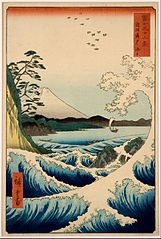
Ukiyoe prints are some of the most famous pieces of artwork from Japan. Almost everyone has, at one time, seen Hokusai’s “Big Wave” print featured above. And portraits of the kabuki actors tend to crop up whenever a Japanese themed picture is needed. The sharp contrasts of the images have a distinct style and have probably done a lot to influence manga artists of today.
5. How to pronounce it
Okay, so it may seem like a simple word to pronounce, but it really isn’t. You have to give it a few tries before it really rolls off your tongue. So try it a few times, quickly. If anything it is a great work out for your tongue. Here is a native saying it courtesy of our good friends at Forvo.com:
4. Some Ukiyo-e had Bewbs
Erotica wasn’t as big of a taboo in Japanese art as it was in Western art. Although not often displayed in museums around the world, erotica was a part of ukiyoe art. And these drawings were not just for dirty minded pervs looking to get their kicks. They were actually quite common.
The style of ukiyoe depicting erotica was called shunga. And there are records of everyone from samurai to housewives purchasing and carrying shunga with them. Although not completely openly accepted (despite Western commenters attempting to portray otherwise), it wasn’t completely against any religious morals like in the West.
Almost all of the major ukiyoe artists at one time created some kind of erotica. Even Hakusai, arguably one of the most famous woodblock artists created a series of prints that depicted a story of a woman making love to an octopus, which of course would never see the light of day in the 19th century West, and to be honest is a bit shocking to see in this modern era, even as art.
3. The major periods
Early Ukiyo-e (1670~1740)
Before around the 1670s, art was mostly limited to the nobility who had the kind of money to commission works of art, much like in the West. Patrons usually liked to see pictures of things that reminded them of their wealthy, like wealthy people doing wealthy things.




But, once Japan was united and the Edo period began. The merchant class found themselves making some serious yen, and there started being an interest in art, especially art that depicted every day things. This merchant class had money, but it seems like they weren’t exactly swimming it, so being able to mass-produce artwork with woodblocks, made prints cheaper and more affordable.
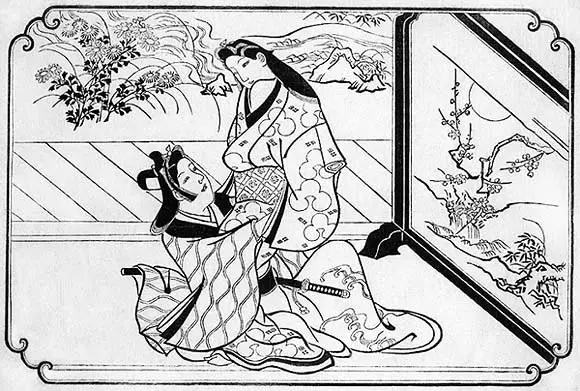
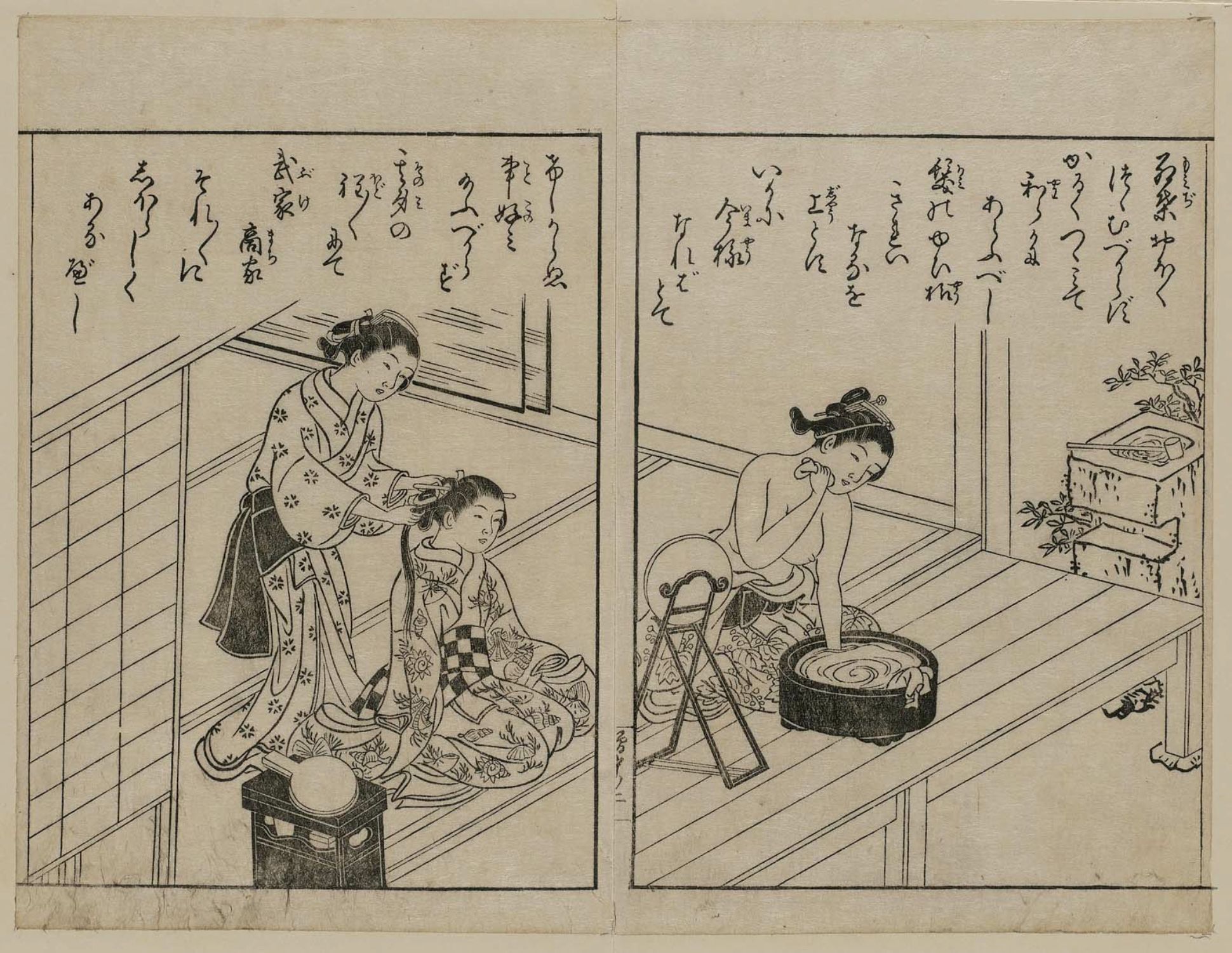
These first pieces of work were mostly in the style of what had come before. They characterized by their use of only one color, typically black, and showed limited use of prospective, usually just sticking to 2D. A lot of them focused on the human figure and ideals of beauty.
Beginning of Color Prints (1740~1780s)
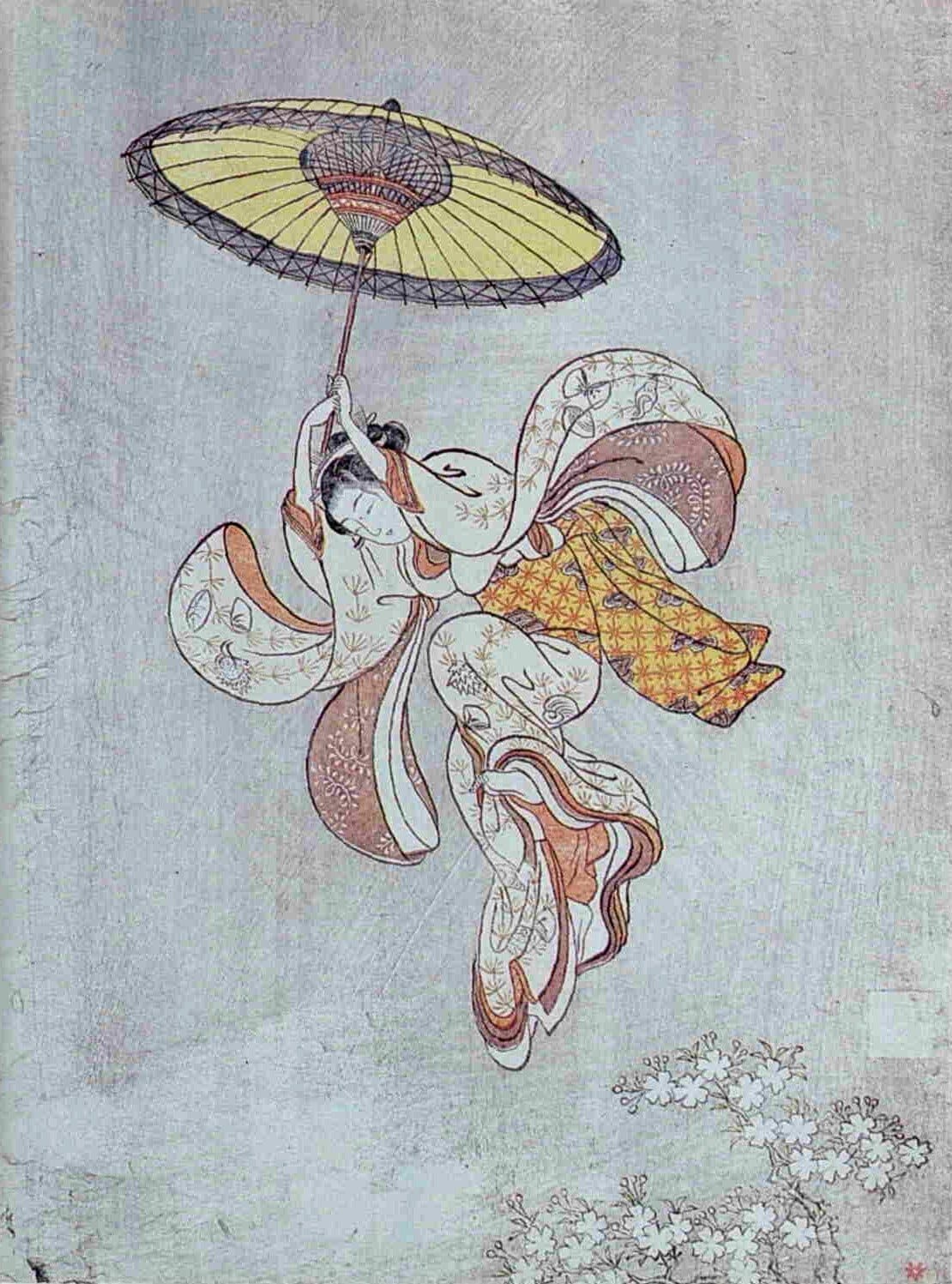
Starting in the 1740s, ukiyo-e prints started to be printed with multiple woodblocks each using a different colored ink. This somewhat complicated process led to more flexibility in creating different images. Landscapes and more complicated scenes became more popular.
During this time, due to influence from the West, paintings started to take on more geometrical prospective. The paintings, in particular Masanobu’s works appeared a lot more 3 dimensional, something that we take for granted today, but was actually a major breakthrough back in the day.
The Peak and Popularization of the Genre (1780~1804)
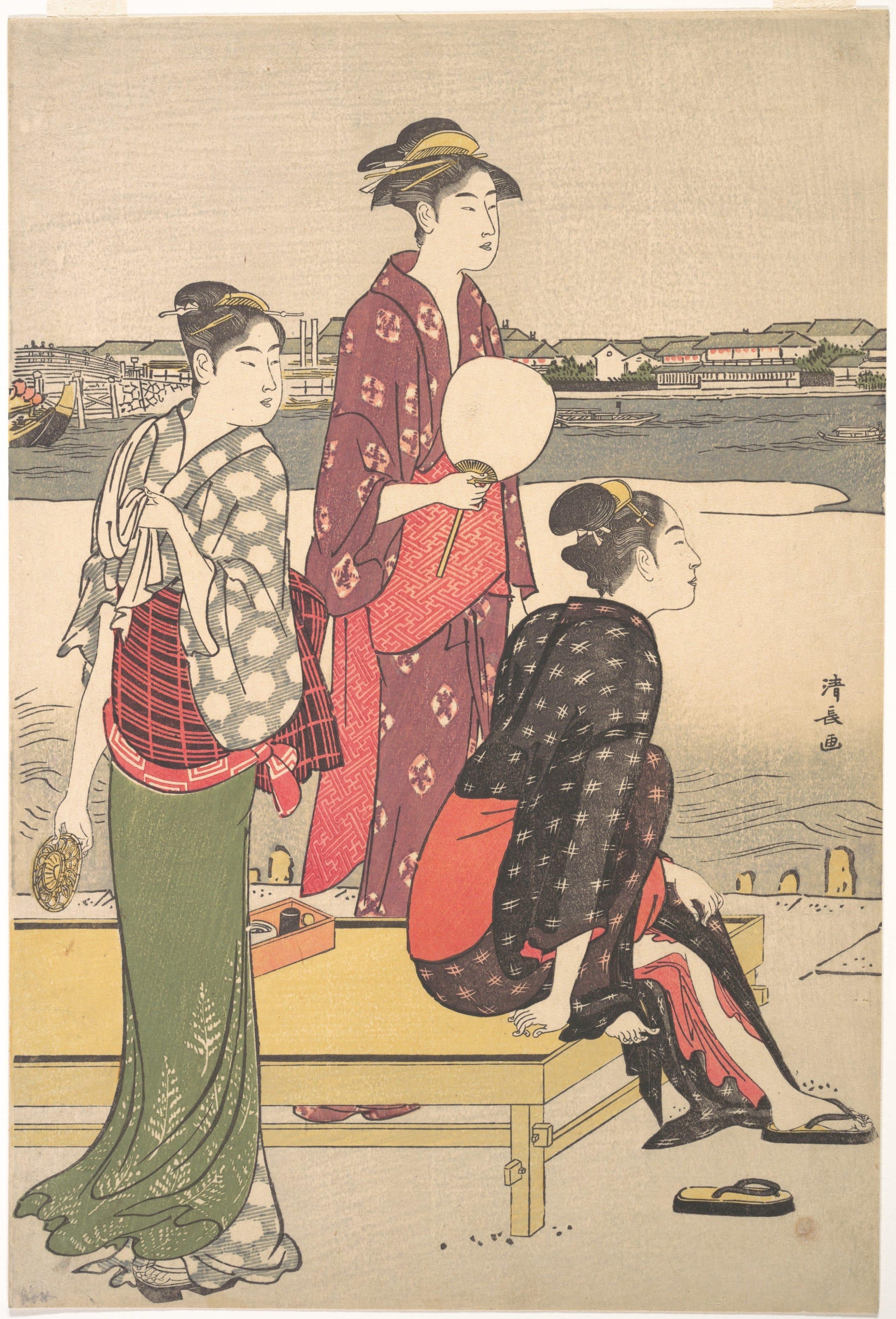
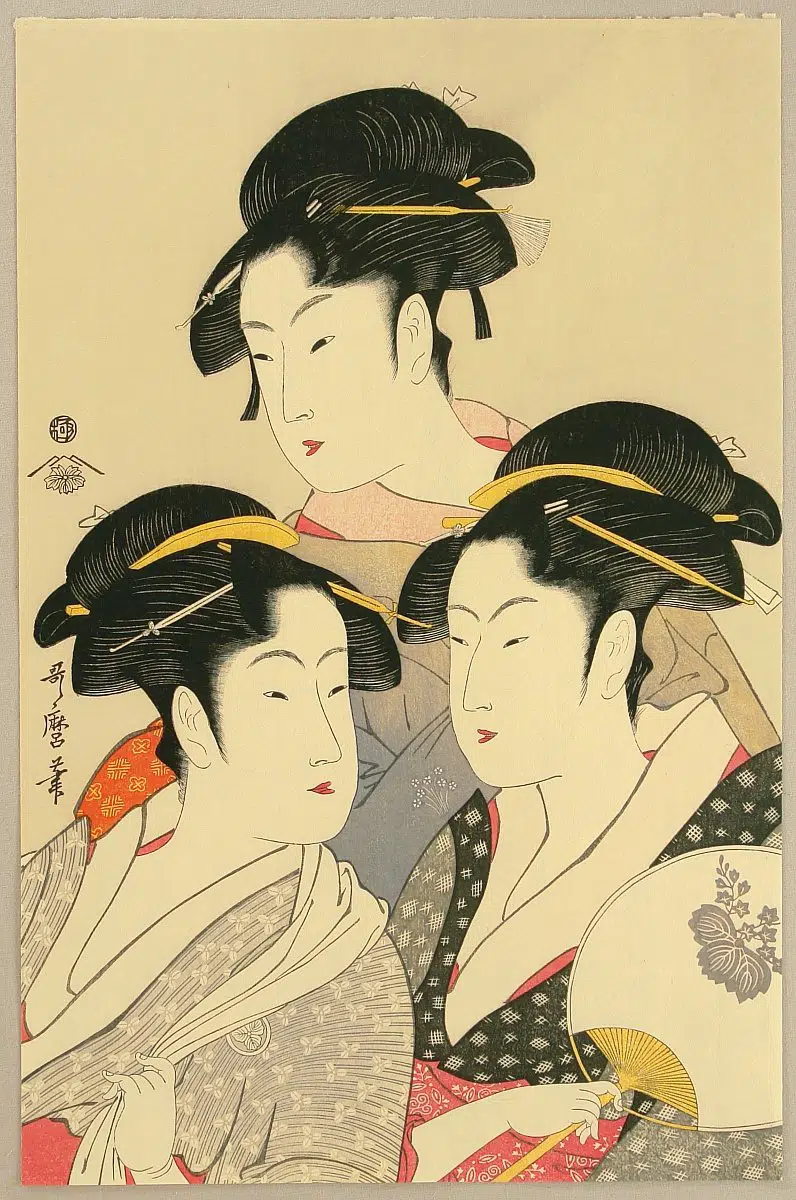
This era brought on some of the greats like Utamaro and Sharaku who placed more emphasis on beauty and harmony. Portraits also began to focus more on the head and torso of someone as opposed to the whole body. Some of the popular woodblocks were of famous kabuki actors and every day beautiful women. A lot of the faces look very similar due to the emphasis on harmony and perfection.
Move toward Landscapes (1804~1868)
Due to the Tenpo Reforms of 1841 to 1843, printmaking of kabuki actors, geisha and courtesans was banned. Artists turned away from people as the subject matter of their prints and focused more on landscapes. This is the area when a lot of the major prints that are famous today were created. Prints like the Big Wave off Kanagawa by Hokusai as well as Hiroshige’s more subdued prints.
There were still scenes of villagers, but there was less emphasis on beauty and perfection of the human form. Artists and the Japanese government didn’t want to focus on decadence. Instead, artists seemed to look for beauty in the every day life and nature that surrounded them.
2. The major artists





1. Further Resources
I’ve just given you a small glimpse of the massive world of ukiyo-e artwork. If you are interested in checking out some more prints for yourself, I encourage you to visit ukiyo-e.org, which has a massive library of prints from around the world cataloged and named for you to sort through. I consulted it several times for some good prints for this article.
If you’d like to be able to identify some of the great’s artworks, I put together my own short ukiyo-e course on Memrise. There you can learn to identify some prints created by some of the great ukiyo-e artists. There is also a course that walks through Hiroshige’s 53 Stations of Tokaido.
Also if you are interested in doing some further reading, be sure to check out Japan Journeys (JPN), which a nice book that arranges some select ukiyo-e prints to show what some of Japan’s greatest cities used to look like. Andreas Marks also has another beautiful book, Japanese Woodblock Prints: Artists, Publishers and Masterworks: 1680 – 1900 (JPN), if you are looking for something large format to enjoy these prints.
Another small primer of ukiyo-e history is Ukiyo-e: An Introduction to Japanese Woodblock Prints (JPN). It is a short and sweet 96 page intro to the art form.
What do you think of Ukiyo-e?
Who is your favorite? Let me know in the comments.
Podcast: Play in new window | Download (Duration: 27:30 — 25.2MB)
Subscribe: RSS


 Loading ...